
 a29gm
a29gm 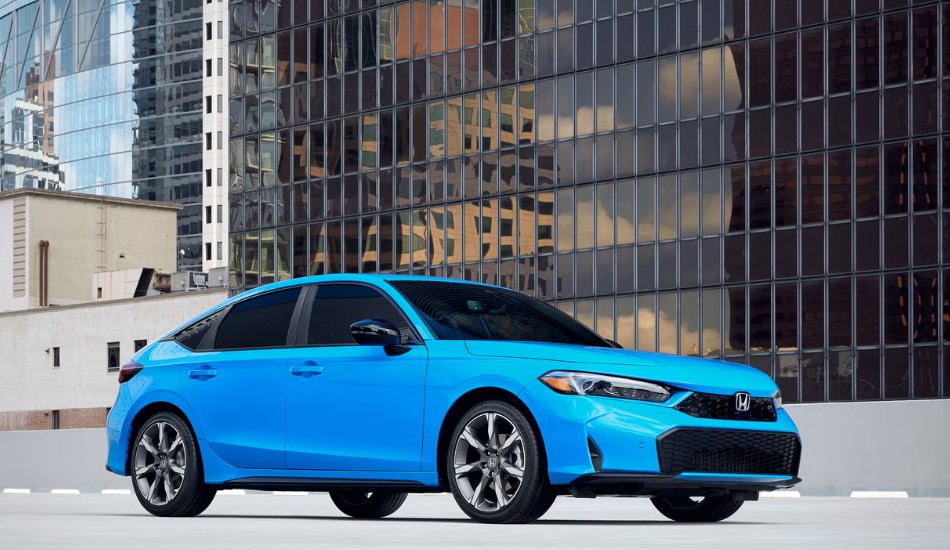
Once associated with environmentalists and limited to a few models, hybrid automobiles have now entered the mainstream, with most automakers offering at least one hybrid option. But what exactly is a hybrid in the automotive sense? Simply put, it is a car or truck that utilizes two different power sources. Technically, the Batmobile, with its combination of turbine and internal-combustion engines, qualifies as a hybrid. However, unless you are Bruce Wayne, the Batmobile is not available for purchase.
What Is a Hybrid?
In the United States, hybrid automobiles use both an internal-combustion engine and an electric motor for propulsion, relying solely on gasoline as fuel. (While diesel hybrids do exist, they are primarily found in locomotives and other heavy-duty applications.) Hybrids are equipped with small high-voltage batteries to power their electric motors, but you do not plug them in.
Without an external power source, electricity for the motor is generated during braking through a process called regenerative braking—often referred to as “regen” for short. If you’re an F1 racing fan, you may know it as a Kinetic Energy Recovery System (KERS). The regen system does not replace traditional brakes but serves as a crucial supplement. Electrical energy collected through this process is stored in the battery for immediate reuse the next time you accelerate. When you leave a stoplight, the stored energy helps get the car moving again and can delay the restart of the gasoline engine—sometimes until you reach 25 mph. When you stop again, the cycle repeats. This results in a hybrid’s city fuel economy being significantly higher than that of a non-hybrid, along with improved highway efficiency.
How Does Regenerative Braking Work?
Regenerative braking is a natural extension of how electric motors operate. When you supply electricity to an electric motor, it powers the car. Once the vehicle is in motion, the same motor acts as a generator, reversing the flow of electrons to convert that motion into electricity, which is then stored back in the battery. This is why hybrid electric motors are often referred to as motor-generators. Importantly, this process also slows the car down, so regenerative braking is activated and controlled by a computer when you press the brake or when descending a slope.
How small is a hybrid’s battery? Typically, it is no larger than 1 kilowatt-hour (kWh), which is just 1 to 2 percent the size of a full electric vehicle’s battery. One-pedal driving, a feature where lifting the throttle can engage regenerative braking, is primarily found in full electric vehicles rather than hybrids, as EVs have higher-capacity electrical systems and much larger batteries.
Despite this, hybrid regeneration can be effective enough for most routine deceleration. A computer continuously monitors how hard you press the brake pedal, blending in traditional brakes—pads and rotors—during harder stops and emergencies. This regen-first approach maximizes electricity collection for propulsion, significantly improving fuel economy. Regeneration is a fundamental aspect shared by all hybrids, although differences emerge in the use of their gasoline engines.
Parallel Hybrids
Parallel hybrids are the most common type, designed to selectively utilize either the gasoline engine or the electric motor to propel the vehicle. They can also engage both simultaneously. The electric motor is preferred at lower speeds because its high initial torque and efficiency make optimal use of the limited battery energy. After a brief delay, the gasoline engine joins in and eventually takes over as speed increases and stabilizes, at which point the engine operates at its most efficient range. Some designs feature a single motor positioned between the engine and a conventional transmission, while others incorporate two electric motors that work together to function as a continuously variable transmission for the engine. Examples of the former include early Honda hybrids and current Hyundai and Kia models such as the Elantra. The latter category includes Toyota, Lexus, and Ford hybrids, such as the Maverick.Series Hybrids
This type is less common but is gaining popularity. Series hybrids utilize a primary drive motor that propels the vehicle using battery energy collected from regeneration at low speeds, while also scavenging energy during deceleration. As speeds increase and battery energy diminishes, the gasoline engine activates to drive a dedicated generator that converts gasoline into electricity to recharge the battery. This design allows the wheels to be electrically driven at all speeds, ensuring smooth and seamless power delivery. However, converting gasoline into electricity adds an extra step that can reduce efficiency, although newer technologies are mitigating this issue. Honda is a recent leader in this category, powering the latest versions of the Civic, CR-V, and Accord hybrids.Blurred Lines
Like many systems, hybrid configurations do not strictly adhere to these definitions. Toyota’s Hybrid Synergy Drive is primarily a parallel system, yet its dual-motor design allows for brief instances of series power generation when the engine operates at its most efficient speed, producing more power than necessary for the driver. Similarly, Honda’s latest primarily series hybrid system can engage the engine to drive the wheels directly under specific conditions when the computer determines it to be more efficient. These exceptions are beneficial as they demonstrate that engineers are striving for the most efficient solutions rather than simply opting for the easiest to explain.
How Hybrids Benefit You
The primary advantage of any hybrid vehicle is its ability to capture and reuse braking energy that would otherwise be lost as heat and wear on the brakes. Most hybrids that attract consumer interest utilize this recovered energy to save fuel and improve miles per gallon (MPG) by allowing the electric motor to delay the activation of the gasoline engine. In contrast, performance-oriented hybrids leverage the harvested energy to enhance overall power and speed.
Fuel-efficient hybrids are an excellent option for those looking to save money or reduce their carbon footprint. After all, high MPG and low carbon emissions are two sides of the same coin. If you live in an apartment or only plan to have one vehicle, an electric vehicle (EV) may not be practical. A hybrid, however, is a gasoline-powered vehicle that does not have special fueling requirements.
In practical terms, a hybrid’s emphasis on regenerative braking means that their brake pads and rotors will last significantly longer than those of conventional cars. They also do not require a separate starter motor, as the electric motor performs that function. Additionally, a hybrid’s compact battery takes up minimal space and does not necessitate expensive battery technology.
Other Types of Hybrids
“Mild hybrids” feature modest 48-volt batteries that cannot provide significant propulsion. However, these systems recharge through regenerative braking and combine the starter and alternator into one unit, allowing for a seamless engine start “in gear” to enhance the operation of their start-stop systems.
Fuel-cell hybrids are a type of series hybrid that includes an electric motor, regenerative braking, and a small high-voltage battery, but they do not have a gasoline engine. Instead, they utilize a fuel cell, a device that converts hydrogen gas into electricity, with water as the only byproduct. Fuel-cell hybrids therefore operate on electricity at all times and are as quiet as EVs. Their hydrogen tanks can be refilled in about five minutes, similar to conventional vehicles, but the availability of refueling stations is extremely limited and primarily concentrated in major population centers in California.
Plug-in hybrids are essentially standard hybrids equipped with significantly larger batteries that enable them to operate solely on electricity for distances of 20 to 50 miles. While they share some of the charging challenges of EVs, these issues are less severe because a plug-in hybrid’s battery is approximately one-quarter the size of an EV’s battery. This makes home charging more manageable, allowing users to enjoy a part-time EV experience without being tethered to charging infrastructure: an EV for weekday commutes, combined with full gasoline capabilities for longer trips. They remain efficient when running on gasoline due to the inherent benefits of regular hybrids. However, potential downsides include a higher purchase price due to the larger battery, a greater likelihood that the larger battery will encroach on cargo space, and a possibly smaller gas tank.